No Snow & Keep Your Lines Light
A snow day that wasn't, a 0.2 mm pencil, and what Crucial Conversations gets right about drawing: keep your lines light until you know where the structure is.
INK + OXYGEN: Chapter FIVE
INK + OXYGEN is my (mostly) weekly series from the intersection and creating. Each entry mentions something I consumed recently, like a book, an essay, a paper/article, and ends with how it actually shows up in real life: in the ICU, at home, or in my own head. No summaries or book reports. Just an idea, one honest application, and the next line I’m trying to draw.
This is Chapter 5.
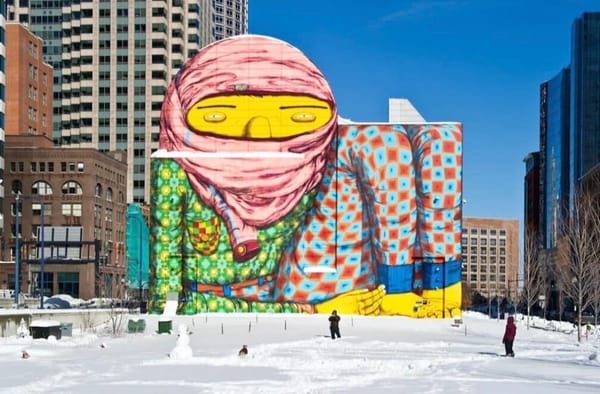
Snow has a peculiar kindness—the way it softens edges and dampens sound, makes the world quieter for a few hours. Yet it also brings something polar that can make our posture worse, breath shallower, movements quieter.
This can affect how we talk to others.
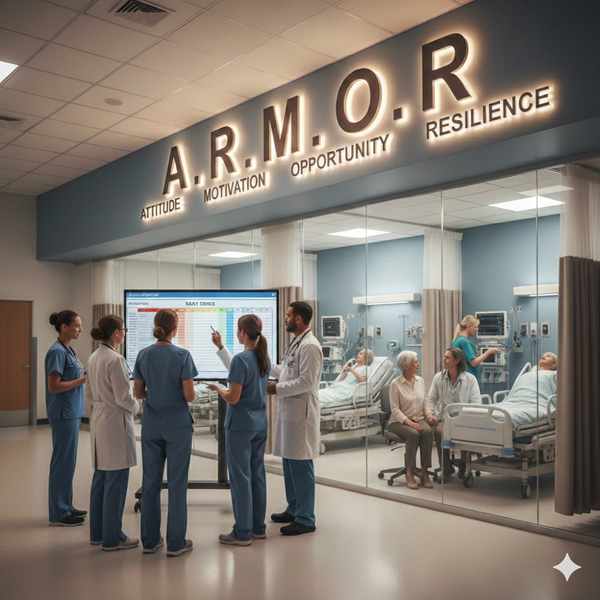
Still, that quiet reminds me of an ICU running well. Not silent because nothing’s happening, but calm because the system’s doing what it should. People know their roles. Information moves cleanly.
Then yesterday: schools closed. Except we didn’t really get much snow.
One may ask: Why close an entire district when only some roads are dangerous? Why inconvenience everyone to protect the few genuinely vulnerable?
Well, it’s obviously for safety. It’s the same calculation we run in hospital medicine. Do you anticoagulate the borderline patient because the clot could kill them, or hold because the bleed would? Do you intubate now while it’s easy, or wait and risk a crash? Most of medicine isn’t hard lines and black and white. There lie gradients, probabilities, gray areas, and the uncomfortable math of preventing one catastrophe by causing ten smaller problems.
A school closure is basically population-level prophylaxis. The benefit is invisible when it works. We celebrate one or two days of it. Yet the cost is immediate and loud. Nobody celebrates the crash that didn’t happen at 7:00 in the morning.
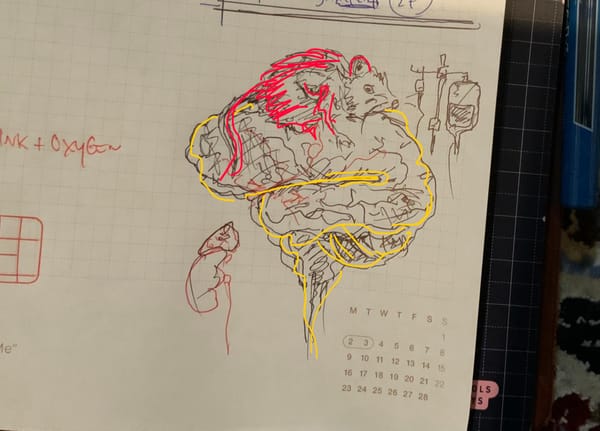
I’ve started re-reading Crucial Conversations. Again, it must be said that this is a systems book. Under stress, we stop being curious about the other’s point of view. Think rodent brain from my last post.
We become the “lawyer who defends our own version of events.” We stop asking what we want to achieve together and instead start fighting to be right. The conversation doesn’t always end nicely.
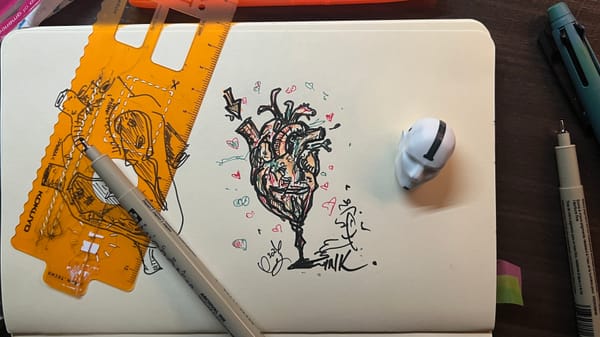
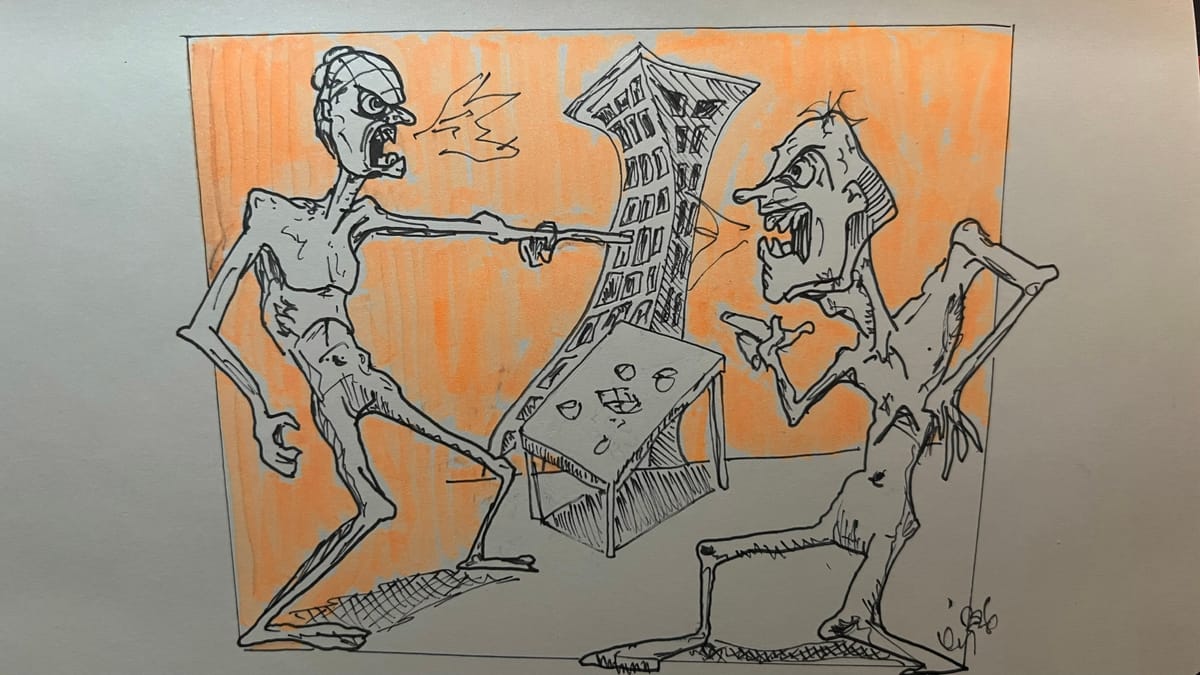
Drawing corrects me. Have you ever tried multi-point perspective? Trust me, it is quite humbling screwing up only to get right. You don’t get one clean viewpoint. Lines converge where you don’t want them. Force the character anatomy into a single vanishing point and your drawn image starts to lie to you. But let two characters coexist, and suddenly there’s a depth. The page stops fighting you. What changes are the lines as facts. Lighter, than darker. Less domination, more attention.
Crucial conversations are perspective work. And it takes a lifetime of mastery to improve on both fronts. Think not “who’s correct,” but “what are we both seeing?”
Like in drawing, keep your lines light in conversation until you know where the structure is.
I want to tell you about this week’s small and lovely armchair obsession: the 0.2 mm pencil. A lead so fine it should snap from disrespect alone, except the whole point is that it doesn’t. The tool is engineered around gentleness. Light pressure. Precision that is unbelievable. You can make a clean line without shredding the paper.
Japan takes this seriously in a way that feels medicinal. I get gaga over it too. Last December, a stationery expo drew forty-five thousand people in four days. High-end nib makers require customers to fill out detailed forms about their writing habits (hand dominance, grip height, pressure), before even starting the tuning of fountain pen nibs.
That level of attention isn’t about luxury. It’s about respect and love for the thing itself. Mechanisms that rotate lead to keep a line crisp. Paper that behaves like it’s otherworldly. I want to visit Japan for that level of attention almost as much as I want to see the people, places and the food.
Imagine a pilgrimage for pens and stationary…only a certain kind of adult understands: a 12-story stationery store where time becomes irrelevant.
If only we gave people and conversations that level of attention.
Call me a pen snob. Guilty. A good pen teaches your hand to slow down. Craft is how humans show respect for other humans.
Snow outside, well, not really actually. But that’s ok as the closure makes us think of others…it makes us more considerate.
Cold? Warm up your posture and your approach.
DOCTOR’S ORDER
Approach your conversation like a drawing: light lines first, multiple vanishing points allowed, curiosity kept alive. A 0.2 mm lead insists that precision can still be careful and kind.
Ask what you’re both seeing, not who’s right. Keep your lines light until you know where the truth is. Good tools matter like attention and consideration, like the reason behind a snow day.